Choosing your first barefoot footwear starts with a question: what will you use it for? This guide gathers the criteria of construction, materials, size, and testing to pick a pair that fits your daily life.
What is barefoot footwear and why choose it?
Barefoot describes a design with toe space, a flexible sole, and no heel elevation. It does not guarantee posture correction or pain relief. The experience depends on the model, your foot, and usage; start by checking how it fits you.
Key features of the shoes barefoot
To know how to choose your first pair of barefoot, it is essential to know the features that define this type of footwear:
✅Zero drop: no difference in height between heel and toe, 100% flat sole.
✅ Thin and flexible sole: check its thickness and how it bends in the specific model.
✅ Wide toe box: let your fingers spread naturally.
✅ Interior structure: check the model's features and any clinical instructions you need to follow.
On our website in the section Why Barefoot? you can visually see the features I mention above.
How to know if you are ready to use barefoot
Before you start using barefoot shoes, evaluate your current situation: Are you used to wearing shoes with thick soles or support? Do you have any previous pain or injury? Are you looking for barefoot for walking, running, or daily use? This information will help you choose a model suitable for your experience level and needs.
Tips for choosing your first pair of barefoot
1. Start with a versatile model
For your first barefoot, choose a model that is versatile, that you can combine with various looks and wear every day for a limited time, extending that time as you get used to it.
2. Prioritize quality
Check the materials of each model: the catalog includes designs with different compositions. Verify exterior, lining, and care instructions, and choose according to your preferences and intended use. Leather is not the only option nor does it alone guarantee a good fit.
3. Make sure to choose the correct size
As a guideline, the SHUU guide considers 0.8–1.2 cm in front of the longest toe for closed footwear, depending on the model and fit. Check if the chart shows foot length or interior measurement: do not add the margin twice. Also review width, heel, and instep.
4. Start the transition gradually
Begin by trying the pair in brief and familiar situations, and adjust usage according to your sensations. You don’t need to follow a universal duration or force a way of walking. If pain appears, reduce or stop the use that causes it; if it persists or you have an injury, consult a healthcare professional.
Where to buy reliable barefoot shoes?
Check the SHUU product sheets to compare models, sizes, and materials. If in doubt, tell our team the intended use and the measurements of both feet.
Conclusion: Your first barefoot, the beginning of a positive change
Choosing well means combining use, measurements, and testing. If a pair doesn’t fit, check size, last, or model before insisting on it.
Frequently asked questions about barefoot footwear:
How long does adaptation take? There is no universal timeframe. First, check that the size and shape fit well and adjust usage based on what you observe, without interpreting pain as a mandatory step.
Are they suitable for running? Check if the model is designed for that activity. A daily use shoe is not automatically a sports sneaker; this guide is not a training program.
Are they for everyone? There isn't a single model suitable for all people and situations. If you have pain, injury, or a clinical indication, seek individual guidance.
You can find more information about our footwear on our BLOG as well as on our website in the section Why barefoot? and if you have any questions or concerns, we will be happy to guide you in your beginnings with the footwear barefoot.
Keep reading


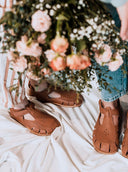
How to choose your first barefoot shoes: A beginner's guide
Choosing your first barefoot footwear starts with a question: what will you use it for? This guide gathers the criteria of construction, materials, size, and testing to pick a pair that fits your daily life.
What is barefoot footwear and why choose it?
Barefoot describes a design with toe space, a flexible sole, and no heel elevation. It does not guarantee posture correction or pain relief. The experience depends on the model, your foot, and usage; start by checking how it fits you.
Key features of the shoes barefoot
To know how to choose your first pair of barefoot, it is essential to know the features that define this type of footwear:
✅Zero drop: no difference in height between heel and toe, 100% flat sole.
✅ Thin and flexible sole: check its thickness and how it bends in the specific model.
✅ Wide toe box: let your fingers spread naturally.
✅ Interior structure: check the model's features and any clinical instructions you need to follow.
On our website in the section Why Barefoot? you can visually see the features I mention above.
How to know if you are ready to use barefoot
Before you start using barefoot shoes, evaluate your current situation: Are you used to wearing shoes with thick soles or support? Do you have any previous pain or injury? Are you looking for barefoot for walking, running, or daily use? This information will help you choose a model suitable for your experience level and needs.
Tips for choosing your first pair of barefoot
1. Start with a versatile model
For your first barefoot, choose a model that is versatile, that you can combine with various looks and wear every day for a limited time, extending that time as you get used to it.
2. Prioritize quality
Check the materials of each model: the catalog includes designs with different compositions. Verify exterior, lining, and care instructions, and choose according to your preferences and intended use. Leather is not the only option nor does it alone guarantee a good fit.
3. Make sure to choose the correct size
As a guideline, the SHUU guide considers 0.8–1.2 cm in front of the longest toe for closed footwear, depending on the model and fit. Check if the chart shows foot length or interior measurement: do not add the margin twice. Also review width, heel, and instep.
4. Start the transition gradually
Begin by trying the pair in brief and familiar situations, and adjust usage according to your sensations. You don’t need to follow a universal duration or force a way of walking. If pain appears, reduce or stop the use that causes it; if it persists or you have an injury, consult a healthcare professional.
Where to buy reliable barefoot shoes?
Check the SHUU product sheets to compare models, sizes, and materials. If in doubt, tell our team the intended use and the measurements of both feet.
Conclusion: Your first barefoot, the beginning of a positive change
Choosing well means combining use, measurements, and testing. If a pair doesn’t fit, check size, last, or model before insisting on it.
Frequently asked questions about barefoot footwear:
How long does adaptation take? There is no universal timeframe. First, check that the size and shape fit well and adjust usage based on what you observe, without interpreting pain as a mandatory step.
Are they suitable for running? Check if the model is designed for that activity. A daily use shoe is not automatically a sports sneaker; this guide is not a training program.
Are they for everyone? There isn't a single model suitable for all people and situations. If you have pain, injury, or a clinical indication, seek individual guidance.
You can find more information about our footwear on our BLOG as well as on our website in the section Why barefoot? and if you have any questions or concerns, we will be happy to guide you in your beginnings with the footwear barefoot.
Keep reading